
29.05.2026.
LIFE CROLIS Methodology Presented at the EEA/JRC LULUCF Workshop 2026 in Copenhagen
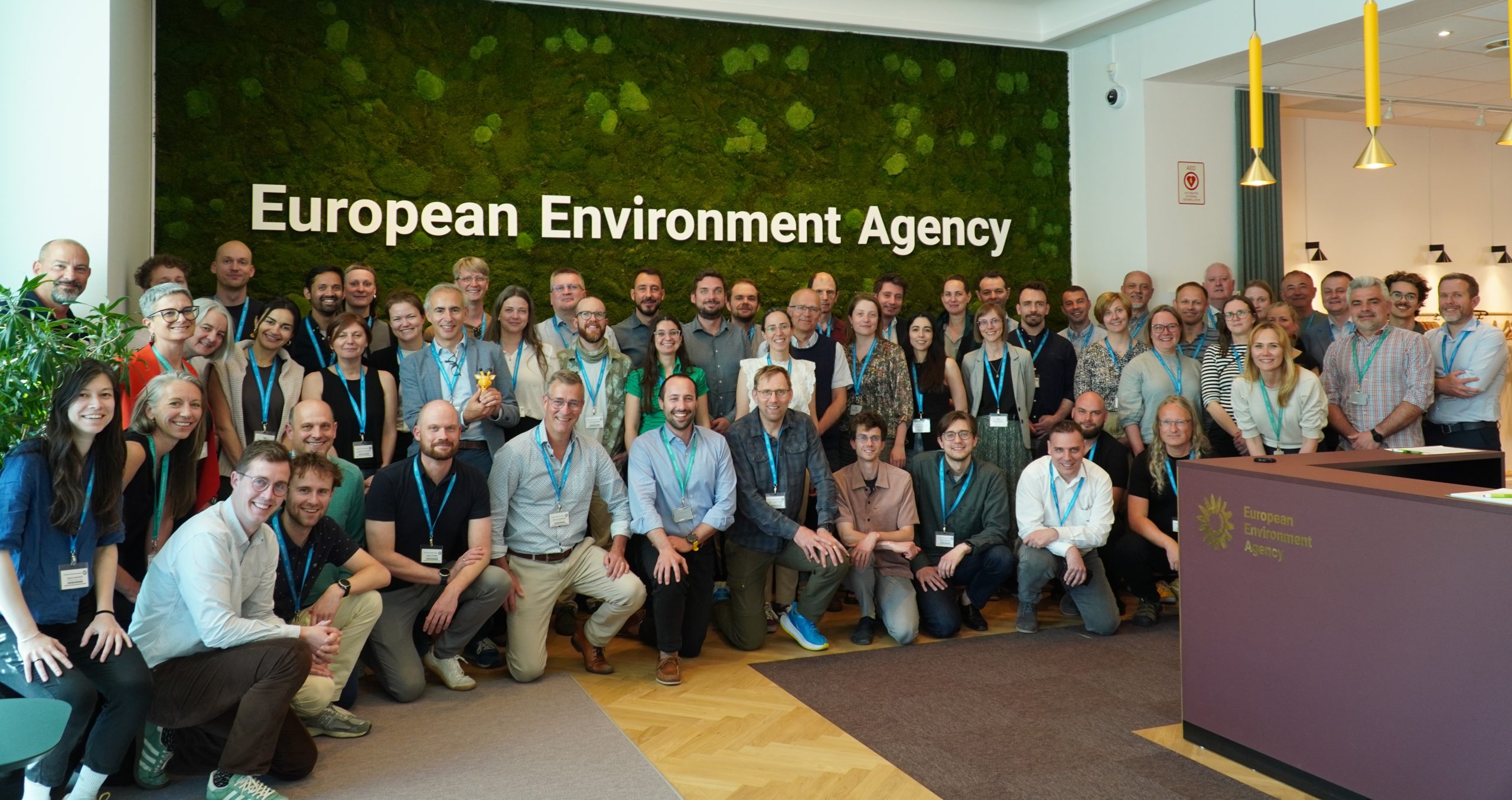
The EEA/JRC LULUCF Workshop 2026 was held on 27 and 28 May 2026 in Copenhagen. It was organized by the European Environment Agency (EEA) and the Joint Research Centre of the European Commission (JRC). The main theme of the workshop was the transition to higher-tier methodologies for reporting greenhouse gas emissions from the LULUCF sector, support for carbon removal certification (CRCF), the use of models and tools for future reporting, and the exchange of national experiences. As part of the workshop, the Croatian methodology for developing a historical time series of land cover changes based on sampling was presented.
The first day of the workshop (27 May) included introductory presentations on the status of the EU LULUCF GHG inventory and policy developments (DG Clima). In the second part of the workshop, work on higher-tier reporting for soils and settlements was presented, while the third part featured national examples. The fourth part of the workshop addressed the post-2030 framework and JRC tools, and the day concluded with the launch of the EEA GHG Knowledge Hub and the LULUCF Instance publication. The second day of the workshop (28 May) was dedicated to forest models and climate impacts (CBM, EFISCEN-space, JRC EU-CBM-HAT), updates on Horizon Europe co-funded projects (PathFinder, ForestNavigator, AVENGER, FORWARDS), and various other topics (HWP, NID transparency, alignment of CAP and GHG inventories, the new EU Bioeconomy Strategy, and the IPCC report on CDR-CCUS).
Croatian Contribution – Presentation by Dr. Vanja Wagner
In the third part of the workshop, particular attention was given to the presentation by prof. Vanja Wagner, PhD (University of Zagreb, CRO-MATH-IN) entitled “LIFE CROLIS: Croatian approach to historic land cover changes”.
The presentation introduced the Croatian methodology for developing a historical time series of land cover (LC) and land use (LU) changes within the LIFE CROLIS project. It is a statistical model for selecting a representative sample of data for the historical identification of land cover and land use. The goal of the project is to develop Croatia’s first harmonized, multi-scale national land monitoring system by integrating national data sources and Sentinel satellite imagery. The system will support LULUCF reporting, spatial planning, and greenhouse gas emission mitigation. It uses orthophoto images from 1968, 2000, 2010, and 2020, as well as SPOT imagery from 1990, classified according to IPCC/LULUCF categories. The initial sampling design (a regular 500 × 500 m grid with 12,600 points in continental Croatia) proved unfeasible due to time and resource constraints of the project.
Therefore, an alternative two-phase stratified (importance) sampling approach was developed. An a priori map was created based on reliable Croatian sources (Croatian Forests, Croatian Waters, the Paying Agency for Agriculture, Fisheries and Rural Development, and the Copernicus CLC backbone). Sampling is reduced in well-documented stable areas and concentrated in areas with data gaps. A 500-metre exclusion radius was applied. The total sample size was increased to 28,400 points.
Additionally, a new LC category, “Grassland with woody”, was developed to represent forest-like surfaces outside the official domain of Croatian Forests data. For the analysis, layer-level weighting principles are applied, taking into account the heterogeneity of the two-phase sampling and regional differences (Continental, Alpine, and Mediterranean regions).
This innovative and practical methodology, tailored to national conditions and available data sources, represents an important contribution to improving the accuracy and efficiency of Croatia’s LULUCF reporting and can serve as an example for other Member States.
Representatives of the Directorate for Climate Transition and the Institute for Environmental and Nature Protection of the Ministry of Environmental Protection and Green Transition participated in the workshop and additionally answered the questions raised by the participants.
The workshop confirmed that the transition to higher tiers and the development of national monitoring systems are crucial for fulfilling future EU obligations. The Croatian approach through LIFE CROLIS demonstrates how smart use of existing national data sources combined with stratified sampling can achieve high data quality with reasonable resources.
The conference program is available here: Agenda.
The Workshop presentations are available here. Mrs Wagner, PhD presentation can be downloaded here: Presentation.
Share this news: