
04.05.2026.
Croatian Forests and EKONERG Present LIFE CROLIS Project at HGK ESG Academy
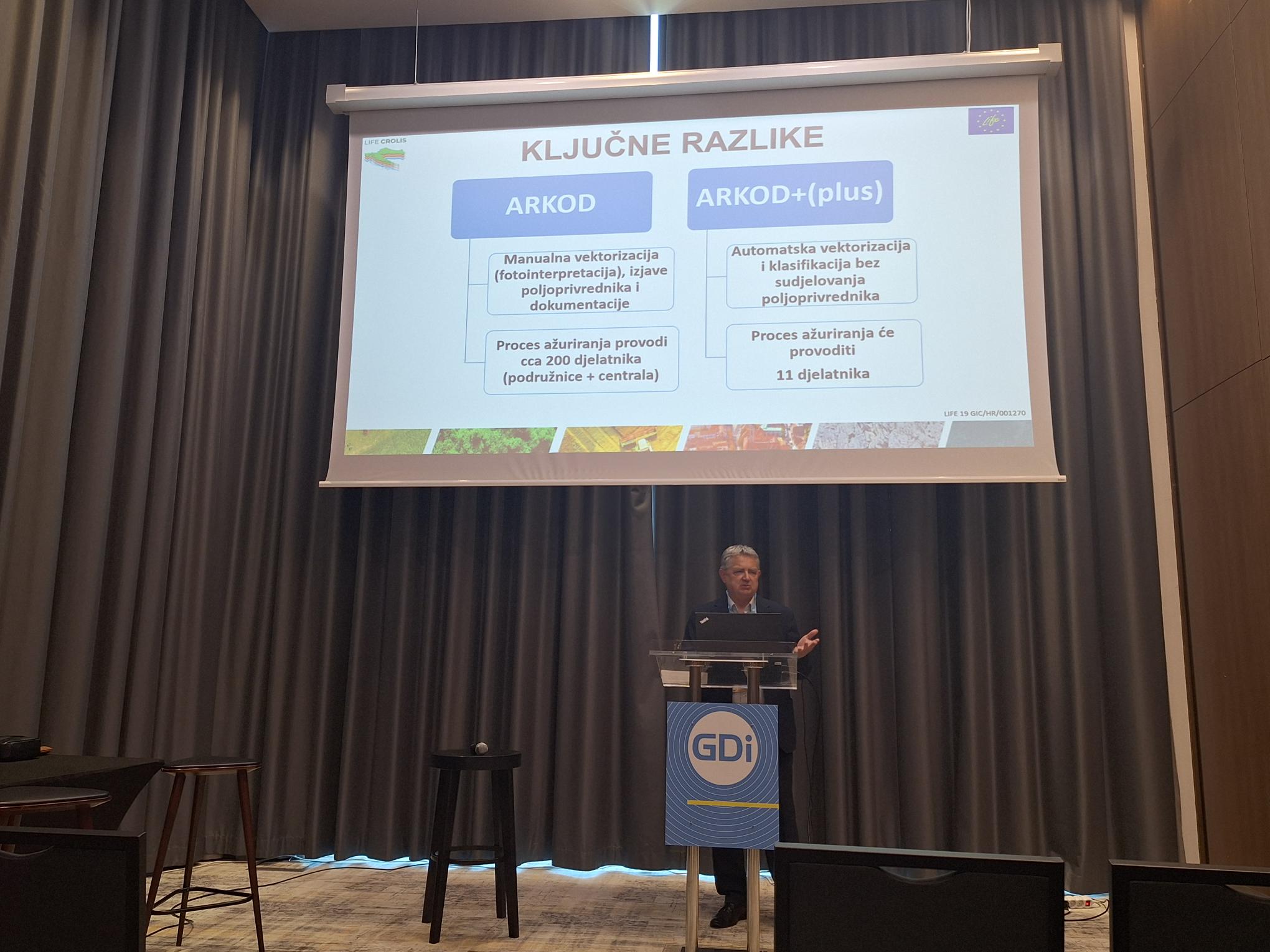
The LIFE CROLIS project and the establishment of ARKOD+ were presented at the GDi Solutions Conference 2026, held on 23rd April 2026 in Zagreb. This was a regional professional conference organized by the Croatian company GDi, which specializes in GIS, digital twins, ArcGIS, and smart infrastructure management. The conference focused on geospatial technologies (GIS), digital twins, artificial intelligence (AI/GeoAI), and the digital transformation of infrastructure.
This year, the conference was further expanded into a multi-day regional event dedicated to the latest achievements in the fields of digital twins, geospatial technologies, artificial intelligence, and smart management of digital infrastructure (public administration, cities, utility companies, energy, water supply, and the environment).
Through workshops, as well as numerous presentations and panel discussions by prominent regional experts in spatial planning and development, infrastructure, and energy, participants had the opportunity to gain valuable insights together through the exchange of knowledge, best practices, and innovative solutions.
As part of the panel session “Natural Resources and Environmental Protection”, the following participants took part:
- Keynote speaker and moderator: GDi Sarajevo – Kenan Kurtović (15-minute introductory presentation)
- Panelist 1: Bosnia and Herzegovina – Nature and Environment (air quality status, etc.) – Zijada Krvavac
- Panelist 2: Croatia – Croatian Forests, ArcGIS as the backbone of the Croatian Forests GIS system – Davor Šelendić
- Panelist 3: Serbia – Plant Protection Forecasting and Reporting Service – Milena Marčić
- Panelist 4: Bosnia and Herzegovina – Water Register ISV BiH (application for issuing water permits) – Karmen Maslač
- Panelist 5: Croatia – APPRRR – Mladen Majcen
his presentation, Mr. Mladen Majcen outlined the similarities and differences between the establishment of the ARKOD and ARKOD+ registries in the context of IAKS and CROLIS requirements. The presentation emphasized the role of ARKOD data in environmental and nature protection through Greening policies, as well as within the current “Green Deal & Fit for 55%” framework. In the technical part, he analyzed the possibilities and benefits of ArcGIS tools, alongside the dedicated software solutions currently in use and those yet to be developed within the LIFE CROLIS project.
The conference program is available here:
https://gdi.net/hr/events-list/gdi-solutions-conference-2026/
The presentation can be downloaded here.
Share this news: